Forklift Diagnostic Tools Explained: What Technicians Use for MHE Repairs
Professional material handling equipment technicians now can utilize the multi-brand diagnostic tools, Jaltest MHE to service forklifts, cherry pickers, scissor lifts, telehandlers, lift platforms, and warehouse equipment from one platform. The right tool helps technicians read fault codes, monitor live data, test components, perform calibrations, view circuit and system diagrams, technical specifications, and guided troubleshooting and repair information with one tool to reduce downtime across mixed-brand material handling equipment fleets.
When a forklift goes down, it rarely stays a forklift problem. The same holds true for other material handling equipment.
A stalled unit can slow dock work, block staging, delay production movement, and force operators to share equipment that was already booked for another job. In a warehouse or distribution center, one dead truck can make the whole floor feel it.
TL;DR: What Forklift Diagnostic Tools Actually Do
Forklift diagnostic tools help technicians move from warning light to confirmed repair. In mixed material handling fleets, the best tools do more than read codes. They help diagnose engine, hydraulic, electrical, battery, controller, and safety-related issues across multiple brands.
| Diagnostic Area | Why It Matters |
|---|---|
| Fault codes | Shows which systems are reporting active or stored issues |
| Live Data | Helps technicians confirm what the machine is doing in real time |
| Calibrations | Allows calibration settings of components. |
| Bi-directional tests | Lets technicians command components and verify system response, clear faults, run actuator tests and more. |
| Maintenance Functions | Performs critical maintenance functions such as DPF regens |
| Hydraulic and electrical access | Critical for lift, steering, traction, control, and communication faults for equipment Power Take Offs. |
| Multi-brand coverage | Reduces the need for separate OEM tools across mixed forklift fleets. |
| Repair information | Integrated troubleshooting and repair information with technical specifications is vital in following the correct repair process to get the equipment and your operation running. |
For warehouses, logistics teams, and MHE repair shops, the outcome is faster troubleshooting, fewer unnecessary parts, better technician confidence, and less equipment downtime.
This guide breaks down what forklift diagnostic tools do, how technicians use them, what systems they cover, and where a multi-brand material handling equipment diagnostic system like Jaltest MHE fits into a modern repair workflow.
What Is Forklift Diagnostics?
Forklift diagnostics is the process technicians use to identify, test, and verify faults in material handling equipment. Forklift diagnostics usually includes reading diagnostic fault codes, monitoring live sensor data, testing actuators across engine, hydraulic, electrical, and control systems, running component tests, viewing wiring information, and confirming the repair before the machine goes back to work.
A warning light tells you something needs attention. Diagnostics help you figure out what, where, and why.
The systems covered by forklift diagnostic tools
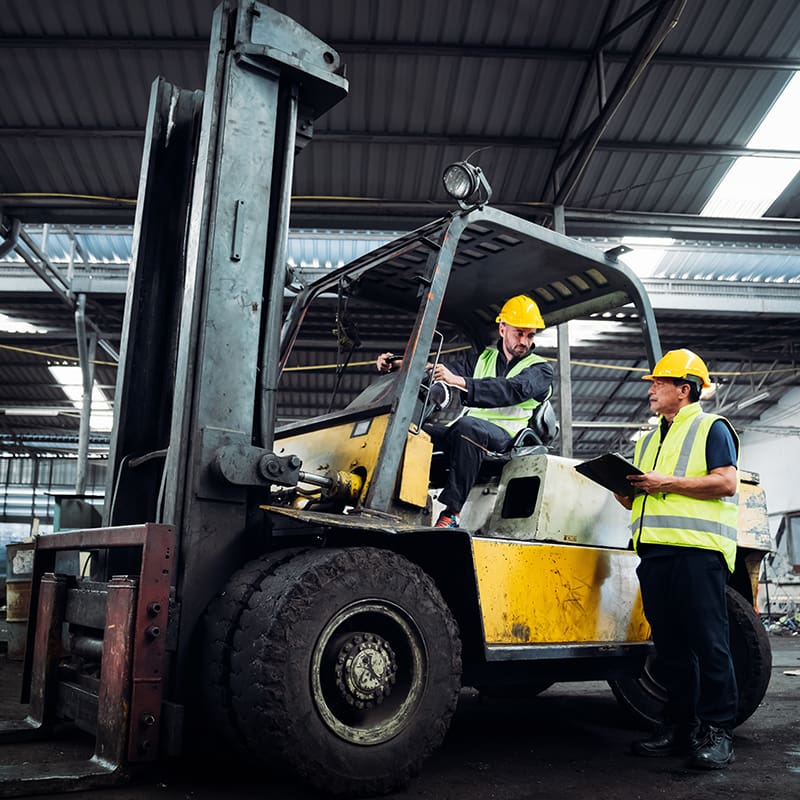
Modern forklifts are not simple lift-and-go machines anymore. Depending on the equipment type, power source, and manufacturer, a technician may need access to:
- Engine controls
- Transmission controls
- Hydraulic systems
- Electric drive systems
- Battery and charging systems
- Steering controls
- Braking systems
- Mast and lift functions
- Aftertreatment systems on diesel units
- Operator controls and safety circuits
Jaltest MHE is designed for forklifts, scissor lifts, telehandlers, boom lifts, harbor cranes, and other MHE equipment. The platform supports guided diagnostics, automated system detection, live parameter monitoring, component activation, wiring diagrams, technical specifications, maintenance schedules, and standard repair times.
Material handling equipment diagnostic coverage is important because most material handling machinery and equipment does not fail in one neat category. A lift issue can involve hydraulics. A travel issue can involve the motor controller. A no-start can involve battery voltage, wiring, a sensor, or a control module.
The tool needs to keep up with the machine.
How diagnostic fault codes work on electric and IC forklifts
Fault codes are the machine’s way of flagging abnormal conditions.
On an internal combustion forklift, a code may point toward engine performance, aftertreatment, fuel delivery, sensors, or hydraulic controls.
On an electric forklift, the issue may involve battery voltage, motor controllers, traction systems, chargers, contactors, communication faults, or safety interlocks.
The code gives the starting point. A good diagnostic tool helps the technician confirm the cause with live data, system tests, wiring information, and repair direction.
That difference matters. Parts swapping gets expensive fast, especially when the real issue is a wiring fault, weak battery, failed sensor, or controller communication problem.
For material handling equipment (forklifts, scissor lifts, boom lifts, telehandlers, reach stackers, etc.), there are many service functions that require a diagnostic tool beyond simply reading and clearing fault codes. DPF regeneration is just one of them.
Engine & Emissions
- DPF regeneration (parked/service regen)
- SCR/DEF system tests
- DEF dosing tests
- Injector cutout tests
- Turbo actuator calibration
- EGR valve tests
- Fuel system priming
- Aftertreatment reset after component replacement
- Idle speed adjustment
- Emissions monitor reset
Transmission & Drivetrain
- Transmission clutch calibration
- Transmission relearn
- Gear selector calibration
- Drive motor calibration (electric units)
- Differential lock testing
- Axle calibration
Braking
- Brake bleeding (electronic systems)
- Parking brake calibration
- Brake wear reset
- Brake pressure tests
- ABS diagnostics
- Brake pedal sensor calibration
Safety Systems
- Operator presence system calibration
- Seat switch testing
- Seat belt monitoring reset
- Stability system calibration
- Overload protection calibration
- Speed limiter configuration
- Proximity warning system calibration
- Camera system calibration
- Radar or object detection sensor calibration
- Telematics module setup
Electric Equipment
- Traction motor calibration
- Lift motor calibration
- Encoder calibration
- High-voltage battery diagnostics
- Battery cell balancing
- State-of-charge reset
- Inverter testing
Hydraulic System
- Hydraulic pump calibration
- Lift cylinder calibration
- Tilt cylinder calibration
- Auxiliary hydraulic function setup
- Hydraulic pressure monitoring
- Flow control adjustment
- Load sensing calibration
Steering
- Steering angle sensor calibration
- Electronic steering calibration
- Rear axle steering calibration (where equipped)
- Articulation angle sensor calibration
Lift & Load Management
- Mast height sensor calibration
- Fork position sensor calibration
- Load weight sensor calibration
- Load moment indicator calibration
- Boom extension sensor calibration
- Outrigger sensor calibration
- Platform level calibration
Electrical & Controls
- Battery management system reset
- Battery replacement registration
- Charger communication setup
- Controller programming
- Software updates
- ECU programming
- Parameter configuration
- Key and immobilizer programming
- Joystick calibration
- Display configuration
Productivity & Service
- Maintenance interval reset
- Service reminder reset
- Machine hours synchronization
- Event log retrieval
- Data recording for troubleshooting
- Active component tests
- OEM functional tests
The cost of undiagnosed forklift faults in warehouse operations
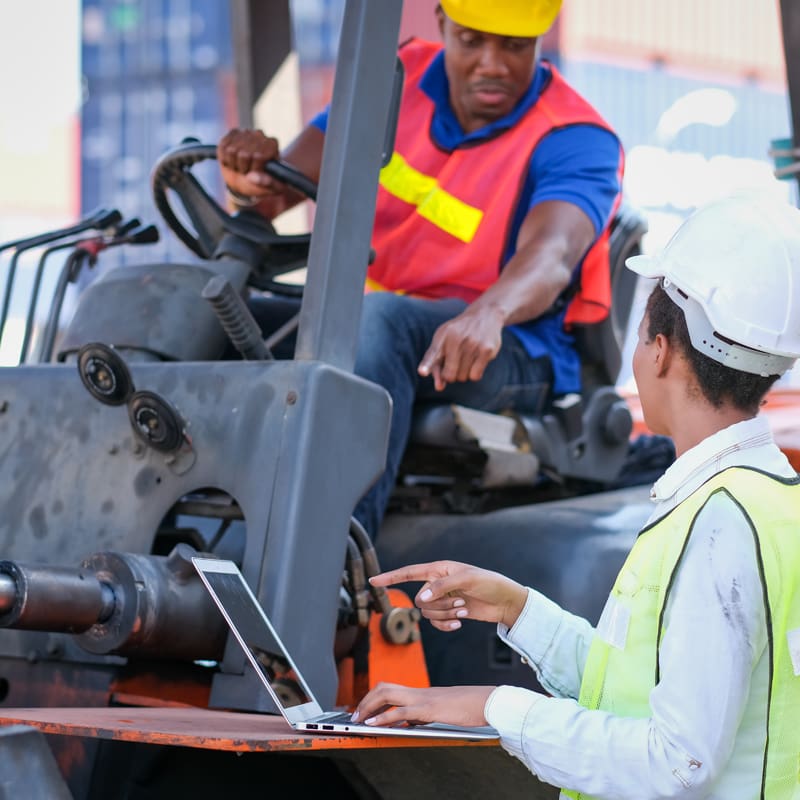
A forklift fault rarely affects only the unit. It can slow pick paths, delay dock work, stop production movement, and force operators to share equipment that was never meant to cover the extra load.
The hidden cost usually shows up in three places:
- Lost productivity from equipment sitting idle
- Longer repair time from incomplete diagnostics
- Repeat failures when the original cause was never confirmed
For warehouse and logistics operations, faster diagnosis helps keep people, pallets, and schedules moving. That is the point of a strong materials handling solution: reduce delays, get the machine back in service, and keep the operation from working around the same problem twice.
What Tools Do Technicians Use to Diagnose Forklifts?
Technicians use several tools to diagnose forklifts, including OEM diagnostic software, handheld scanners, laptop-based diagnostic platforms, electrical meters, service information, and multi-brand MHE diagnostic tools. For mixed fleets, multi-brand tools are often the practical choice because they reduce the need for separate OEM systems.
OEM diagnostic tools: manufacturer-specific scanners and their limitations
OEM diagnostic tools are built for a specific manufacturer. They can be useful when a fleet runs mostly one brand or when a repair requires brand-specific access.
The problem starts when a shop services a mixed fleet.
One warehouse may have Toyota, Crown, Raymond, Hyster, Yale, Mitsubishi, Caterpillar, Linde, Jungheinrich, and other equipment in the same operation. Depending on the fleet, that can mean multiple tools, multiple logins, multiple subscriptions, and different workflows for every brand.
That setup works until a technician needs to move fast. Then it becomes a scavenger hunt with cables.
Multi-brand MHE diagnostic tools: what they cover and why technicians use them
Multi-brand MHE diagnostic tools are built to work across multiple equipment manufacturers and machine types. Jaltest MHE covers forklifts, telehandlers, lift platforms, and other warehouse and logistics machinery, with dealer-level commands, bi-directional controls, parameter changes, maintenance functions, troubleshooting guides, repair information, DPF regenerations, aftertreatment resets, injector calibrations, hydraulic calibrations, and other advanced commands.
Technicians use multi-brand tools because they help standardize the process:
- One platform for multiple machine types
- Faster system identification
- Fewer separate OEM programs
- Access to live data and system tests
- Repair information inside the diagnostic workflow
- More consistent documentation
For a shop or fleet with mixed material handling equipment, that consistency matters as much as the software itself.
Laptop-based vs. handheld diagnostic tools for forklift repair
Handheld tools can be useful for quick checks, simple code reading, and basic maintenance tasks. They are easy to carry and simple to use.
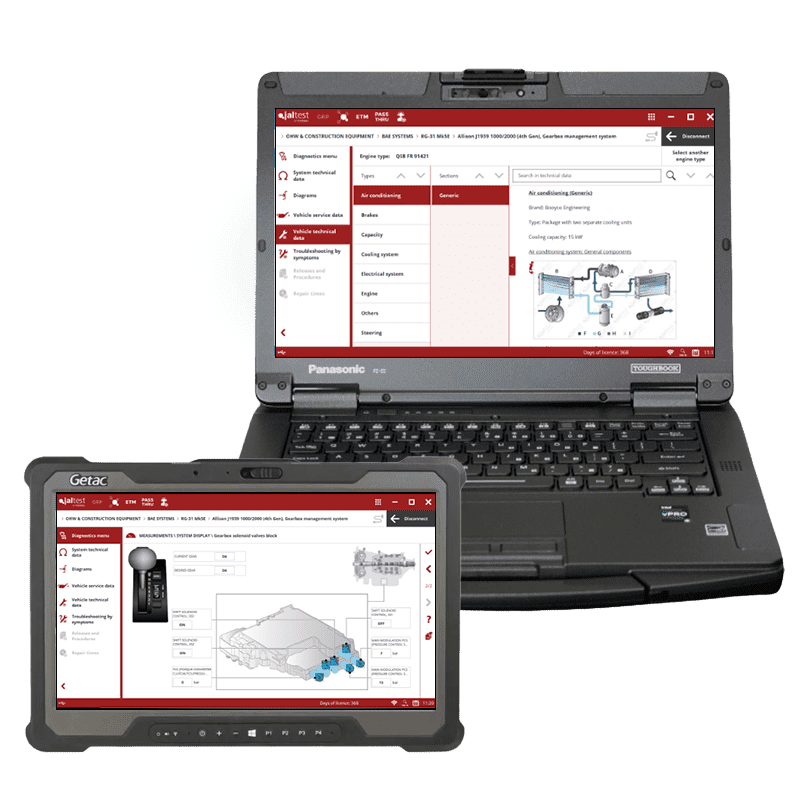
Laptop-based platforms usually make more sense for deeper diagnostics. They give technicians more screen space, better repair information access, stronger reporting, and easier navigation through wiring diagrams, live data, and guided tests.
For professional MHE repairs, especially in mixed fleets, laptop-based tools are often the better long-term fit. A forklift fault can involve hydraulics, electronics, controllers, wiring, and power systems in the same repair.
A tiny screen gets old fast when you are chasing a wiring diagram in a busy shop.
How Forklift Diagnostic Tools Work: Step-by-Step
A forklift diagnostic tool connects to the machine, identifies the control systems, reads active and stored fault codes, displays live data, and allows the technician to run tests that confirm the issue. The goal is to move from fault code to verified repair with fewer guesses.
Step 1: Connect the diagnostic interface to the forklift OBD or proprietary port
The technician connects the diagnostic interface to the forklift’s diagnostic port. Some equipment may use standard-style connectors, while many machines use manufacturer-specific or application-specific cables.
This is one reason cable coverage matters. The tool is only helpful if it can physically connect to the machine in front of the tech.
Triad’s MHE product category includes the Jaltest MHE Build-A-Kit, software renewals, diagnostic cables, cable kits, and accessories built around material handling diagnostic work.
Step 2: Identify the machine, model, and ECU configuration
Once connected, the diagnostic software identifies the machine and available electronic control units. This may include engine, transmission, hydraulic, traction, battery, or safety-related controllers.
Accurate identification helps the technician avoid chasing the wrong system. On mixed fleets, automated system detection can save time at intake.
Step 3: Read and interpret active fault codes
The technician reviews active and stored fault codes. Active codes point to problems currently detected by the machine. Stored codes can show previous issues or intermittent faults.
The key is interpretation.
A fault code may name the affected circuit or system, but it does not always name the failed part. A good diagnostic workflow connects that code to tests, system data, diagrams, and repair direction.
Step 4: Monitor live sensor data
Live data helps the technician see what the machine is doing while it runs or responds to commands. Depending on the system, that can include:
- Temperature
- Pressure
- Voltage
- Current
- Speed
- Throttle position
- Hydraulic values
- Battery state
- Motor controller readings
- Sensor signals
Live data is where a technician can spot the difference between a bad component, a weak signal, a wiring issue, or a condition caused by another system.
Step 5: Run actuator and system tests to confirm the fault
Bi-directional controls let the technician command a component or function through the diagnostic tool. This can help test outputs, activate components, run calibrations, reset maintenance data, or verify a repair.
Jaltest MHE supports live data, calibrations, component activation, parameter changes, maintenance resets, fault code reading, and thousands of bi-directional commands for material handling equipment.
This is where the repair starts to get real. The technician is no longer guessing from a code. They are testing the system and confirming what the machine can actually do.
Forklift Brands Covered by Professional MHE Diagnostic Tools
Professional MHE diagnostic tools are usually evaluated by brand coverage, machine type, system access, cable availability, and software functions. Coverage can vary by model, year, controller, and configuration, so technicians should confirm coverage before buying any platform.
Toyota, Crown, Raymond, Hyster-Yale, and major IC forklift brands
Shops and fleet maintenance teams often need coverage across major forklift and warehouse equipment brands. Common names include Toyota, Crown, Raymond, Hyster, Yale, Mitsubishi, Caterpillar, Linde, Clark, Komatsu, Doosan, Jungheinrich, and others.
The important question is not just “Does it cover the brand?”
Ask:
- Does it cover this model?
- Does it connect with the right cable?
- Does it access the system I need?
- Does it support the function I need?
- Does it include repair information for this fault?
- Can my technicians use it without starting from scratch every time?
That is the difference between owning a diagnostic tool and actually diagnosing the forklift.
Electric forklift ECU diagnostics: what is different
Electric forklifts bring a different diagnostic path than IC units.
Instead of engine and aftertreatment faults, technicians may spend more time with battery systems, motor controllers, traction controls, charging faults, contactors, sensors, software parameters, and communication networks.
The diagnostic process still follows the same logic:
- Connect
- Identify systems
- Read faults
- Check live data
- Run tests
- Verify the repair
The difference is the type of data and components being tested.
For mixed fleets with electric and IC forklifts, a tool needs enough depth to handle both sides of the aisle.
Jaltest MHE: Professional Forklift Diagnostics for Mixed Fleets
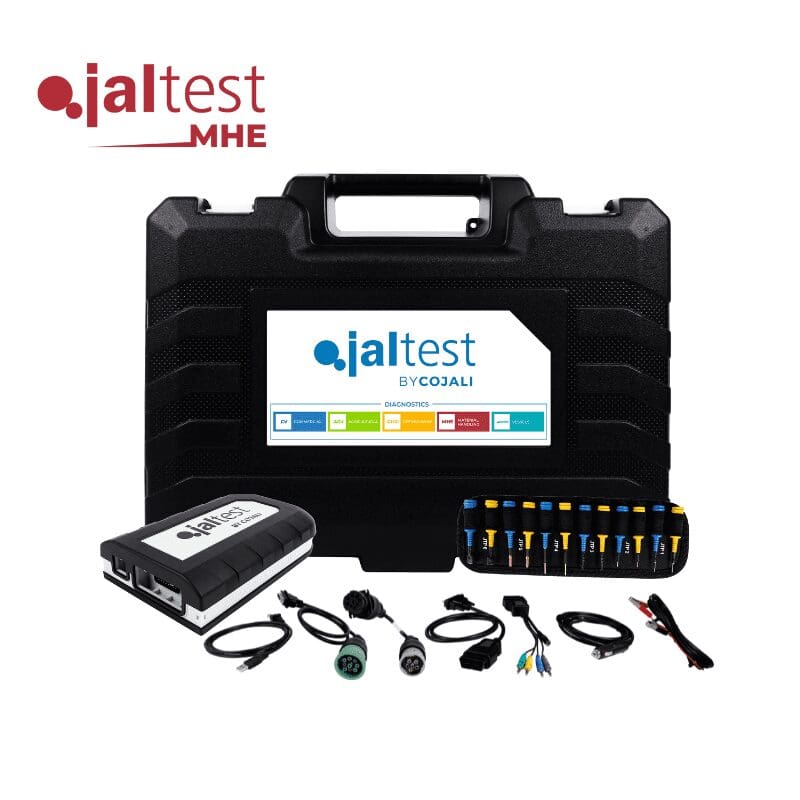
Jaltest MHE is a professional diagnostic platform for material handling equipment, built for forklifts, telehandlers, lift platforms, and warehouse machinery. It gives technicians a single diagnostic workflow for mixed MHE equipment instead of forcing every brand into a separate tool or software setup.
System coverage across engine, hydraulic, and electrical systems
Jaltest MHE helps technicians diagnose and service complex material handling systems with features such as:
- Automatic system and fault code detection
- Live parameter monitoring
- Bi-directional controls
- Component activation
- Hydraulic calibrations
- Parameter changes
- Maintenance resets
- DPF regenerations on supported diesel equipment
- Aftertreatment resets
- Injector calibrations
- Interactive wiring diagrams
- Technical specifications
- Guided repair procedures
- Standard repair times
The Jaltest Material Handling Equipment Build-A-Kit includes software activation, one year of license, and one year of Jaltest Info. Triad also offers MHE diagnostic scan tools, renewals, diagnostic cables, and cable kits for material handling equipment service.
How Jaltest MHE reduces diagnostic time per repair order
Jaltest MHE helps reduce diagnostic time by putting fault codes, live data, tests, diagrams, and repair information into one workflow.
That helps technicians spend less time switching tools and more time confirming the fault.
For the shop or fleet, the outcome is practical:
- Less downtime for critical equipment
- Faster repair decisions
- Fewer unnecessary parts
- Better technician confidence
- More consistent diagnostics across mixed brands
- Stronger repair documentation
- Reduced dependence on OEM-only tools
This is where Triad fits into the equation. Jaltest is the diagnostic platform. Triad helps make it work inside the operation with tool selection, setup, onboarding, training, U.S.-based support, and long-term consultation.
That support layer helps teams get value from the tool instead of letting it become another expensive item nobody wants to touch.
Benefits of the Right Forklift Diagnostic Solution
A professional material handling diagnostic setup should help the whole operation, not just the technician holding the cable.
For technicians, it means fewer dead ends and better repair direction.
For fleet managers, it means less downtime, better tool consistency, and fewer delays waiting on outside service.
For shops, it means more service capability, better throughput, and more confidence in taking on mixed-brand MHE repairs.
For operations teams, it means equipment gets back to moving product instead of waiting for someone to find the right scanner, adapter, login, or manual.
That is the job of a strong diagnostic solution: make the repair path shorter, cleaner, and easier to repeat.
Why should you renew Jaltest MHE Software
Forklift and material handling equipment diagnostics depend on current coverage. Warehouses keep adding new machines, controllers, battery systems, hydraulic functions, and safety systems. If your software is outdated, the tool may not support the equipment that just rolled in.
With an active Jaltest MHE license, technicians keep access to available software updates and technical information for supported forklifts, telehandlers, scissor lifts, boom lifts, harbor cranes, and material handling equipment.
That includes:
- Software updates: Updates help improve and expand coverage for supported makes, models, systems, and diagnostic functions.
- Technical information: Technicians can use available wiring diagrams, component locations, maintenance intervals, troubleshooting, and system data.
- Support for software and update issues: Your team has a support path when Jaltest, Windows, or software update questions come up.
For warehouses, logistics teams, and MHE repair shops, renewal is tied directly to uptime. A current tool helps technicians diagnose faster, avoid unnecessary parts, and get equipment back into service before one down forklift slows the whole floor.
Triad helps make the renewal process less of a guessing game. We can help confirm the right MHE license, support the update process, and keep your diagnostic setup aligned with the equipment your team services.
FAQ: Forklift Diagnostic Tools
Renew before the license expires, especially if the shop supports multiple forklift brands or newer equipment. Waiting until a machine is down can turn a simple renewal into lost warehouse time.
Yes. Triad can help identify the right renewal, support software update questions, and help keep the tool ready for daily warehouse or shop use.
Forklift systems change by make, model, controller, and power type. Renewal helps technicians stay current with supported equipment instead of relying on outdated diagnostic coverage.
It helps maintain access to current software updates and technical information for supported material handling equipment. That can include updated coverage, functions, wiring diagrams, maintenance information, and system data.
MHE diagnostics refers to diagnosing material handling equipment such as forklifts, telehandlers, scissor lifts, boom lifts, and warehouse machinery. It includes fault code reading, live data monitoring, component testing, calibrations, maintenance resets, wiring information, and repair guidance for the systems that keep equipment operating.
A standard OBD2 scanner may read limited engine-related information on some equipment, but it usually will not access forklift-specific systems such as hydraulics, traction controls, electric drive systems, mast functions, or proprietary controllers. Professional forklift diagnostics typically require MHE-specific software, adapters, and cables.
To run a forklift diagnostic, connect the diagnostic interface to the machine, identify the model and control systems, read active and stored fault codes, monitor live data, run system or actuator tests, and verify the repair. Professional tools also provide wiring diagrams, technical data, and guided troubleshooting.
Technicians diagnose forklifts with OEM software, multi-brand MHE diagnostic platforms, handheld scanners, laptop-based diagnostic tools, electrical meters, service information, and machine-specific cables. For mixed fleets, multi-brand tools like Jaltest MHE are useful because they cover multiple equipment types and systems from one platform.
Ready to Elevate your Material Handling Equipment Diagnostics?
If your team works on mixed forklifts, lifts, telehandlers, or warehouse equipment, the right diagnostic setup can cut downtime and make repairs easier to repeat.
Bring Triad your equipment list, common fault issues, current tool setup, and the brands that slow your technicians down. Triad will help you choose the right MHE diagnostic solution, set it up correctly, train your team, and support the workflow after the sale.