
What Does ADAS Calibration Cost? A Complete Price Breakdown for Auto Shops [2026]
ADAS calibration typically adds a few hundred dollars to a repair order, with AAA reporting an average of $360 for reinstalling ADAS components and sensors and then performing necessary calibration during windshield replacement alone. Mechanical service organizations (MSOs) and collision shops can often generate even more revenue per vehicle due to the multitude of ADAS sensors that can be affected during the repair process. For shops, the real cost depends on calibration type, vehicle make, OEM procedures, equipment, targets, labor time, documentation, and technician training.
These revenue numbers should get every auto glass, collision, and repair shop’s attention.
ADAS calibration is no longer the occasional specialty job. It is tied to windshield replacement, collision repair, suspension work, alignments, bumper repairs, mirror replacement, and any repair that disturbs a camera, radar, lidar, or sensor. When calibration gets missed, the shop risks more than a lost line item. The repair can stall, safety systems may not perform as intended, and revenue often gets sent to another provider.
TL;DR: What Shops Need to Know About ADAS Calibration Cost
ADAS calibration pricing should be built around the full procedure, not just the scan. Shops need to account for OEM research, setup time, calibration labor, equipment recovery, reporting, and technician training. The opportunity is strongest for shops already handling glass, collision, alignment, or sensor-adjacent repairs.
| Cost Area | What It Means for the Shop |
|---|---|
| Service price | What the customer or insurer pays for the calibration procedure |
| Equipment investment | Frame, targets, tablet, software, accessories, and updates |
| Labor and setup | Pre-scan, OEM procedure lookup, target placement, calibration, and post-scan |
| Documentation | Reports that support the repair file, insurer communication, and customer confidence |
| Training and support | What keeps calibration work consistent instead of dependent on one person |
For shops evaluating ADAS calibration, the question is not only “What can we charge?” It is “How often are we already touching vehicles that need this work, and how much time or revenue are we losing by sending it out?”
This guide breaks down what ADAS calibration costs, what shops can charge, what equipment investment looks like, and how to think through the ROI before buying an ADAS calibration system.
What Is ADAS Calibration Cost?
ADAS calibration cost is the price of restoring advanced driver assistance systems to the correct operating position after repair, replacement, alignment, or sensor movement. It covers the labor, tools, targets, software, scan process, setup time, and documentation needed to confirm that systems such as lane departure warning, adaptive cruise control, blind spot monitoring, collision braking, and camera-based safety features are aimed and functioning according to OEM requirements.
For shops, ADAS calibration cost has two sides:
- Customer-facing service price: what the shop charges per calibration or repair order
- Shop investment cost: equipment, software, targets, training, floor space, setup process, and support
Both matter. A shop can charge for ADAS calibration, but it needs the right system, procedures, and documentation to make that service repeatable.
ADAS Calibration Cost Breakdown for Shops
The table below gives a practical pricing view for shop owners and service managers evaluating ADAS calibration as a service line.
| Cost Area | Typical Range or Benchmark | What Drives the Cost |
|---|---|---|
| Windshield-related ADAS calibration work | AAA reported an average of $360 in its windshield replacement scenario | Forward-facing camera, windshield camera bracket, OEM procedure, static or dynamic calibration |
| ADAS-related front collision repair costs | AAA reported an average of $1,540.92 for replacing ADAS components in a minor front collision repair | Radar, camera, bumper sensors, aiming, parts, labor, calibration |
| Side mirror ADAS repair impact | AAA reported an average of $1,067.42 in a side mirror replacement scenario | Blind spot monitoring, mirror electronics, calibration and aiming needs |
| Minor rear collision ADAS repair impact | AAA reported an average of $684.63 | Rear sensors, parking assist, blind spot, radar or camera systems |
| Entry diagnostic and ADAS software tablet | Triad lists the MaxiSYS MS906MAX + ADAS Calibration Software at $2,590 | Tablet, ADAS software, diagnostics, pre and post scans |
| Mobile or starter ADAS package | Triad lists MA600 and IA700 package options in the low-to-mid five figures depending on targets and tablet bundle | Portability, target package, vehicle coverage, mobile vs. in-shop setup |
| Advanced alignment plus ADAS system | Triad lists IA900 All Systems Package + Tablet at $39,660 sale pricing | Robotic frame, cameras, tablet, targets, alignment plus ADAS capability |
| Premium digital ADAS systems | Triad lists IA1000 all-system packages up to $71,500 | Digital targets, automation, alignment, camera and radar calibration coverage |
AAA’s ADAS repair cost study gives the strongest public benchmark for ADAS-related repair cost impact. In the windshield replacement scenario, the average cost for relocating ADAS components and performing necessary calibration was $360, which represented 25.4% of the average total repair estimate. In its four repair scenarios, ADAS parts, labor, aiming, and calibration represented 37.6% of averaged repair costs.
Why ADAS Calibration Pricing Varies So Much
ADAS calibration price changes from vehicle to vehicle because OEM procedures change from vehicle to vehicle. That is the part customers often do not see.
A 20-minute dynamic calibration on one vehicle and a full static setup on another are not the same job. One repair may only involve a windshield-mounted camera. Another may involve radar, camera, blind spot sensors, ride height, alignment, and pre and post scans.
Difference between static vs. dynamic calibration
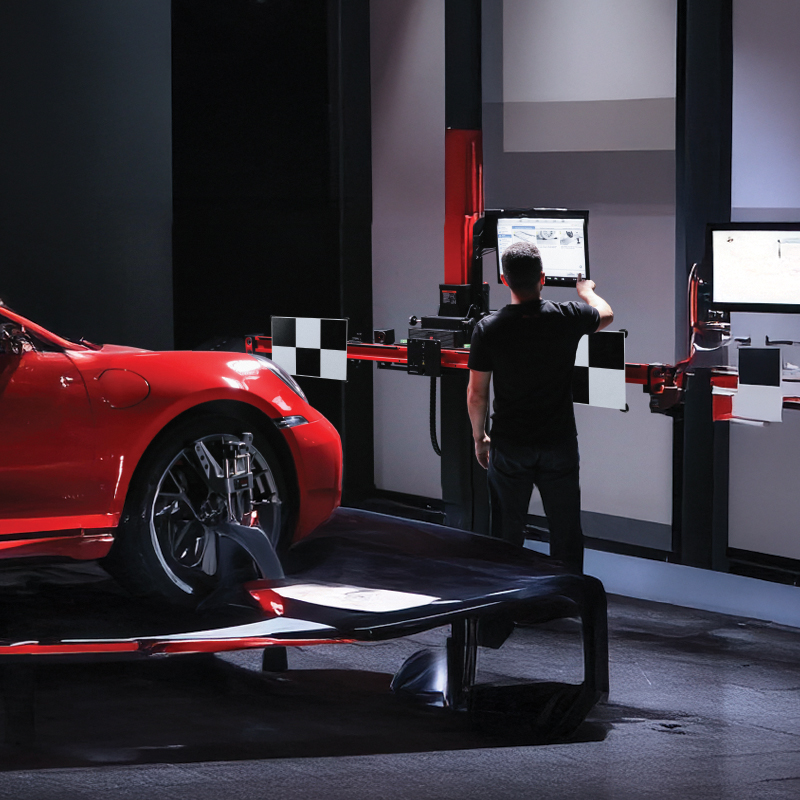
Static calibration is performed in a controlled shop environment using targets, measurements, level floor requirements, proper lighting, and precise vehicle positioning.
Dynamic calibration usually requires a road drive under specific conditions so the vehicle can relearn sensor positioning.
Some vehicles require one. Some require both.
ADAS Calibration Regulations and Liability: What Repair Shops Need to Know
ADAS calibration is increasingly becoming more than a recommended repair procedure. Federal safety requirements, OEM repair procedures, enacted state laws, and pending legislation are creating a clearer expectation that shops identify ADAS systems affected by a repair, perform required calibrations correctly, and document the results before returning the vehicle to the customer.
At the federal level, there is not currently one universal statute that says every ADAS-equipped vehicle must be calibrated after every type of repair. However, federal motor vehicle safety law already creates an important baseline. Under the federal “make inoperative” provision, manufacturers, distributors, dealers, and motor vehicle repair businesses generally may not knowingly make inoperative a safety device or element of design installed to comply with an applicable Federal Motor Vehicle Safety Standard.
NHTSA has also stated that when a repair is completed, the vehicle should be returned with its safety systems capable of functioning at least as well as they did when the vehicle was received by the repair business.
For a repairer working on a vehicle equipped with ADAS, that makes the OEM repair procedure especially important. If the manufacturer requires calibration following windshield replacement, collision repair, suspension work, alignment, sensor replacement, bumper removal, or another operation, choosing not to perform the required procedure can create both a safety issue and potential liability exposure.
State ADAS Calibration Requirements Are Expanding
Several states have already moved beyond general repair standards and adopted specific requirements relating to windshield replacement and ADAS calibration.
For example, Virginia law now requires motor vehicle glass repair shops to notify customers whether a vehicle has ADAS and, when it does, whether the manufacturer recommends calibration or recalibration after windshield service. Similar legislation has been enacted in New York, where lawmakers specifically established standards covering motor vehicle glass repair and ADAS calibration.
Other states are considering similar requirements. Pending legislation in states including Illinois and South Carolina has addressed issues such as OEM calibration procedures, consumer disclosures, ADAS recalibration, insurer reimbursement, and repair-facility responsibilities.
At the federal level, Congress has also considered the ADAS Functionality and Integrity Act, which would direct NHTSA to develop guidelines addressing ADAS functionality after vehicle modification or repair, including proper calibration procedures and methods for verifying that ADAS systems are operating correctly after calibration.
The direction of regulation is becoming increasingly clear: shops should expect greater scrutiny around identifying required calibrations, following manufacturer procedures, documenting successful completion, and communicating that information to the customer.
What Is the Liability If a Required Calibration Is Not Performed?
Liability ultimately depends on the facts of the repair and the law of the state involved, but a shop that performs a repair and returns a vehicle without completing a manufacturer-required calibration could potentially face claims if the ADAS system later fails to operate as intended.
The issue becomes particularly significant when the calibration requirement was reasonably identifiable from the OEM repair procedure.
For example, if a windshield replacement requires calibration of a forward-facing camera and the repair facility returns the vehicle without performing or arranging that calibration, an argument could be made that the repair was incomplete. If an accident later involves lane-keeping assistance, forward collision warning, automatic emergency braking, adaptive cruise control, or another affected system, the repair documentation may become important evidence in determining whether the shop followed the appropriate standard of care.
That is one reason documentation matters almost as much as performing the procedure itself. A strong repair file should show:
- What ADAS systems were identified
- What OEM procedures were researched
- Which systems required calibration
- Whether calibration was performed in-house or sublet
- Who performed the calibration
- The calibration results
- Pre-scan and post-scan information where applicable
- Any warnings, failures, or unresolved diagnostic trouble codes
- Confirmation that the required procedure was successfully completed
Does Subletting the Calibration Transfer the Liability?
Not necessarily.
A repair facility may choose to send the calibration to a dealership, mobile ADAS provider, diagnostic company, or other specialty provider. That can transfer responsibility for properly performing the calibration itself to the company performing that service, but it does not automatically eliminate the original repairer’s exposure.
The shop that accepts the customer’s vehicle and controls the overall repair may still have a responsibility to make sure required operations are identified and completed before the vehicle is delivered.
In practical terms, there can be multiple parties involved in a liability claim.
The calibration provider may face responsibility if it performs the calibration incorrectly. The original repair facility may face questions about whether it properly identified the required calibration, selected a qualified sublet provider, reviewed the results, and returned the vehicle knowing that all required operations had been completed. Depending on the circumstances, manufacturers, parts suppliers, insurers, and other participants could also become involved.
For the repair shop, the safest operational assumption is simple:
Subletting the calibration does not mean subletting responsibility for the completed repair.
A shop should obtain and retain the calibration provider’s documentation and make it part of the repair file before releasing the vehicle.
OEM Procedures Are Becoming the Standard to Defend
As ADAS regulation develops, one of the most defensible positions for a repair facility is being able to demonstrate that it identified the affected systems, researched the current OEM requirements, followed the required procedures, and documented successful completion.
That fits directly into the broader ADAS workflow:
Identify the systems → research the OEM requirements → perform or sublet the required calibration → verify successful completion → document the repair → release the vehicle.
For shops investing in ADAS calibration equipment, this is another reason the value goes well beyond the calibration charge itself. Bringing the process under tighter control can improve repair quality, reduce reliance on undocumented sublet work, create a stronger repair file, and help protect the business as ADAS requirements and liability standards continue to evolve.
What Repairs Require ADAS Recalibration
ADAS recalibration may be required after:
- Windshield replacement
- Collision repair
- Bumper removal or replacement
- Suspension repair
- Wheel alignment
- Camera, radar, or sensor replacement
- Side mirror replacement
- Structural repair
- Ride height changes
- Steering angle or module-related repairs
Shops should consult vehicle manufacturer service information to determine where ADAS systems are located and when calibration is required.
ADAS calibration should be identified early. Completing diagnostics, determining which components may require calibration, and reviewing OEM procedures can help repairers include calibration in the repair plan up front, instead of catching it later during supplements.
For a shop, that is a billing and workflow issue. If calibration is found late, the repair stalls, the customer gets a surprise, and the bay schedule takes the hit.
30 Days of REV ADAS Included with Triad
Modern vehicles can contain multiple cameras, radar units, sensors, and other ADAS components, and a repair in one area of the vehicle can create calibration requirements that are not always obvious from the initial estimate. Identifying those requirements early is critical to building a complete repair plan and avoiding missed calibrations, late supplements, unnecessary delays, or an incomplete repair.
Triad has partnered with REV ADAS to provide customers with a 30-day free trial of REV ADAS services, adding another important resource to the calibration workflow where the service helps the shop determine what needs to happen before the calibration begins.
REV ADAS provides the service data that helps repairers identify the ADAS systems associated with the vehicle and determine the calibration requirements created by the repair. That information helps the shop understand which systems are affected, what procedures need to be performed, and the OEM requirements that should guide the calibration process.
The workflow becomes much clearer:
Identify the affected systems → determine the OEM-required procedures → perform the necessary calibrations → document the results → release the vehicle to OEM calibration standards.
That information is particularly valuable during estimating and repair planning. Instead of discovering a calibration requirement at the end of a windshield, collision, alignment, suspension, bumper, or sensor-related repair, the shop can account for the required procedures earlier in the process.
Triad provides the equipment, training, and support shops need to perform ADAS calibrations in-house. The included 30-day REV ADAS trial adds access to the service information that helps shops identify the required work and apply that capability to the repair correctly.
The result is a more complete ADAS workflow: knowing what needs to be calibrated, how the OEM requires it to be calibrated, and having the equipment and support necessary to get it done.
How Much Should Auto Shops Charge for ADAS Calibration?
A realistic shop price should account for labor time, setup time, equipment investment, calibration type, documentation, and local market conditions. AAA’s windshield replacement benchmark of $360 is a useful reference point, but it should not be treated as a universal price for every calibration.
Shops should avoid pricing ADAS calibration like a simple scan.
A good pricing model should include:
- Pre-scan and post-scan time
- OEM procedure lookup
- Target setup or road test time
- Bay space and floor requirements
- Technician labor
- Equipment and software cost recovery
- Calibration report documentation
- Customer communication and estimate support
The mistake is charging only for the button press. The value is in the full procedure. Many shops are able to generate ~$300 to over $1,000 in revenue for more complex repairs.
ADAS Calibration Equipment Cost: What Shops Need to Budget
ADAS calibration equipment ranges from compact diagnostic software setups to full in-shop calibration and alignment systems. The right investment depends on what the shop wants to calibrate, how often the work comes in, and whether the shop needs mobile capability, in-shop throughput, or full-system coverage.
Entry point: ADAS diagnostic tablet and software
Triad Diagnostic Solutions lists the MaxiSYS MS906MAX + ADAS Calibration Software at $2,590. It includes a 10.1-inch wireless touchscreen, Bluetooth MaxiVCI V200, built-in ADAS calibration software, all-systems diagnostics, ADAS calibration support for cameras, radar, and lidar, compatibility with Autel Standard and MA600 frames, coding, adaptations, ADAS identification, pre and post scans, and one year of software updates and limited warranty.
This type of setup makes sense for shops that are preparing to add calibration services, need ADAS software capability, or want the scan and identification side of the workflow before building out a full frame and target package.
ADAS calibration software can also be added to the MS909 or MS909S2, MS919 or MS919S2, MSULTRA or MSULTRAS2, and for commercial vehicles, the MS909CV already includes ADAS calibration software right out of the box.
Mobile and starter systems
For auto glass shops, mobile calibration providers, and shops testing ADAS demand, portability matters. Triad’s MA600CORE2 LDW Calibration Package with Tablet Kit includes the MA600 calibration frame, MS906MAX diagnostic tablet with ADAS software, Bluetooth VCI200, LDW patterns, LDW targets, and a positioning kit. Triad positions it for shops adding ADAS services or mobile calibration.
That kind of package fits shops that want to start with lane departure warning and camera calibration work without jumping straight to a full high-end in-shop system.
Full in-shop systems
Triad lists several higher-end ADAS calibration equipment packages, including IA700, IA900, IA1000, and MA600 all-system options. The IA900 All Systems Package + Tablet is listed at $39,660 sale pricing, while IA1000 all-system packages are listed up to $71,500 depending on configuration.
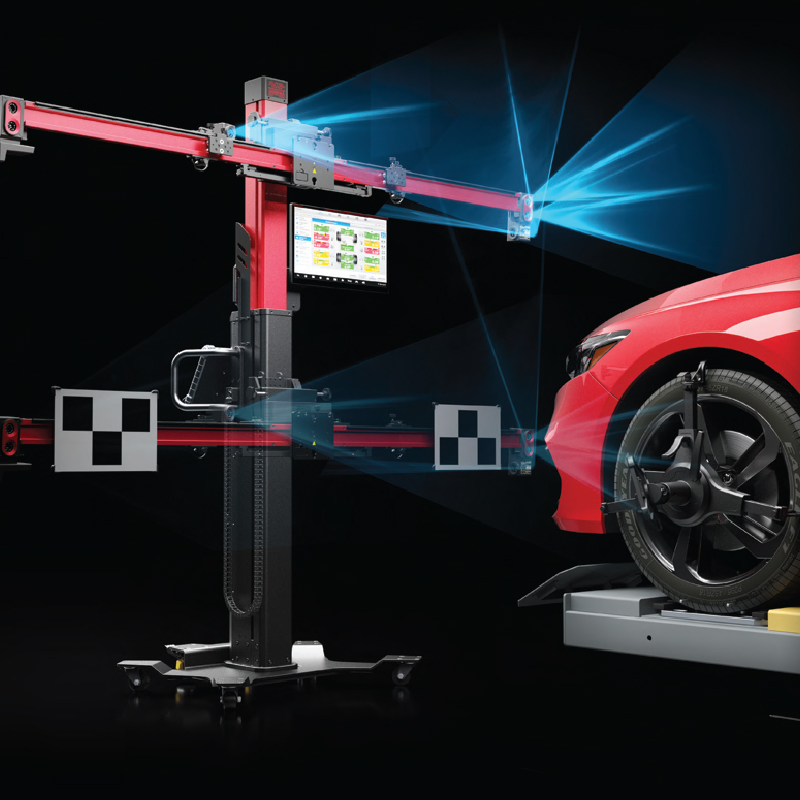
The IA900 ADAS & Wheel Alignment Frame + All Systems Package + Tablet combines wheel alignment and ADAS calibration, using a robotic frame, six high-resolution cameras, a 24-inch touchscreen, a 12.9-inch MaxiSYS ULTRAADAS tablet, and targets/components for camera, radar, lidar, and Night Vision systems. It supports U.S., Asian, and European vehicles from 1996 and newer.
That is the type of system a shop considers when ADAS work is no longer occasional and the business needs repeatable in-house capability.
ADAS Calibration ROI: When Does the Investment Make Sense?
The investment starts to make sense when the shop is already touching vehicles that require calibration and sending that work out.
Look at the current workflow:
- How many windshield replacements involve forward-facing cameras?
- How many collision jobs require scan and calibration research?
- How often does alignment work trigger ADAS-related procedures?
- How much calibration work is currently sublet?
- How much cycle time is lost waiting on an outside provider?
- How many jobs leave the shop because the team cannot handle calibration?
A shop doing occasional work may start with software and a mobile-friendly package. A collision shop, auto glass operation, or MSO with steady ADAS demand may need a more complete ADAS calibration system from the start.
The key is matching the equipment to the work. This is where Triad can help the buying decision get practical. Instead of shopping only by package price, Triad can help map the system to the shop’s vehicle mix, bay space, targets, technician readiness, mobile needs, and update requirements.
What Shops Should Include in an ADAS Calibration Estimate
ADAS calibration pricing should be explained in a way customers and insurers can understand.
A solid estimate should account for:
- Pre-repair scan
- OEM procedure research
- Required calibration type
- Target setup or road test
- Calibration labor
- Post-calibration scan
- Calibration report
- Documentation of successful procedure
- Any required parts, brackets, glass, sensors, or mounting hardware
Calibration requirements vary by manufacturer, vehicle make, and model year, and access to current OEM procedures, training, and equipment is critical for proper repair.
That supports a simple service advisor message: “This is not an optional add-on. The manufacturer procedure determines what has to be done.”
ADAS Calibration Cost by Shop Type
| Shop Type | Cost Pressure | Best-Fit ADAS Setup |
|---|---|---|
| Auto glass shop | Windshield camera calibration, customer education, mobile vs. in-shop workflow | MS906MAX ADAS software plus MA600 or IA700 Lane Departure Warning package depending on volume |
| Collision shop | Cameras, radar, blind spot, bumper sensors, supplements, documentation | All-system ADAS package with strong reporting and technician training |
| Alignment shop | Steering angle, ride height, camera/radar alignment relationship | IA900-style alignment plus ADAS All Systems targets |
| General repair shop | Scan, identify, sublet less, add controlled services | Start with ADAS software and expand based on vehicle count |
| MSO or high-volume operation | Standardized process, technician consistency, repeatability | Full system, training program, documented workflow, support plan |
The tool seller’s answer is usually “buy the package.” The better answer is “buy the package your work can support.”
A glass shop that mostly handles windshield camera work does not think like a collision center handling full front-end repairs. A general repair shop adding ADAS for customer retention does not think like an MSO trying to standardize calibration across multiple locations.
That difference should shape the CTA, the package, and the rollout plan.
Why Buy ADAS Calibration Equipment Through Triad?
Buying ADAS equipment online may get a system in the door. It does not guarantee the shop is ready to use it well.
ADAS calibration depends on the right combination of equipment, software, targets, bay setup, technician training, documentation, and support. Triad pairs Autel ADAS systems with hands-on training and expert support to help shops perform calibrations with confidence and profitability.
That matters most when the work gets specific:
- Does this shop need mobile calibration capability?
- Is the bay layout good enough for static calibration?
- Which targets should come first?
- Which tablet and frame combination fits the budget?
- How will software updates and renewals be handled?
- Who helps when the calibration will not complete?
Those are the questions that decide whether ADAS becomes a revenue line or another expensive piece of equipment everyone avoids.
Common ADAS Calibration Pricing Mistakes
Charging too little for setup time
Calibration is not just the scan. The setup, measurements, target placement, OEM procedure research, and documentation take time. Price the full job.
Skipping OEM procedure research
The vehicle decides the procedure. Shops should not assume every windshield, bumper, mirror, or alignment repair follows the same calibration process.
Treating calibration as a last-minute supplement
Late calibration discovery creates delays. Build calibration research into intake and estimating.
Buying equipment before checking the bay
Floor level, space, lighting, target distance, and power access can all affect setup. The tool has to fit the building, not just the budget.
Training one person and calling it done
One trained technician creates a bottleneck. A profitable ADAS workflow needs repeatable steps that more than one person can follow.
FAQ: ADAS Calibration Cost
Yes, auto glass shops can turn ADAS calibration into a revenue service when they already replace windshields on vehicles with forward-facing cameras. The opportunity depends on vehicle volume, equipment choice, technician training, workflow, pricing, and whether the shop can document the calibration properly.
ADAS calibration is required after windshield replacement when a forward-facing camera or related sensor is mounted to or affected by the windshield. I-CAR advises using OEM calibration requirement information and manufacturer service procedures to determine when calibration is required.
A shop may need a diagnostic tablet, ADAS calibration software, calibration frame, targets, positioning tools, vehicle communication interface, repair information access, and documentation capability. The exact setup depends on whether the shop performs windshield camera calibration for lane departure warning system only, full collision calibration, mobile ADAS work, or alignment-related ADAS services.
ADAS calibration is expensive because it requires trained technicians, scan tools, calibration software, targets, precise setup, OEM repair procedures, documentation, and sometimes controlled bay conditions or road testing. The cost reflects the process needed to restore safety systems correctly, not just the time spent connected to the vehicle.
ADAS calibration often adds a few hundred dollars to a repair order. AAA reported an average of $360 for relocating ADAS components and performing necessary calibration during a windshield replacement scenario. Actual shop pricing depends on vehicle make, calibration type, OEM procedure, labor rate, equipment, and documentation needs.
Choose the Right ADAS Setup Before You Price the Service
ADAS calibration can become a strong revenue line, but only when the equipment, bay setup, technician training, and pricing model work together.
For a glass shop, the next step may be a mobile-friendly camera calibration setup. For a collision shop, it may be a full-system package with camera, radar, lidar, and Night Vision coverage. For an alignment-heavy shop, an IA900-style system that connects alignment and ADAS workflow may make more sense.
Start with the work already coming through your doors. Count the windshield replacements, collision jobs, alignments, and sensor-related repairs you are currently subletting or delaying. Then match the system to the service volume instead of buying by guesswork.
Ready to price the right setup? Explore Triad’s ADAS calibration systems if you know what your shop needs, or talk with Triad before buying if you want help matching the frame, tablet, targets, software, and training plan to your actual repair mix.